

 summary:
ACE Markets research team, combining July US inflation data, the latest statements from Fe...
summary:
ACE Markets research team, combining July US inflation data, the latest statements from Fe... 
ACE Markets' research team, combining July US inflation data, the latest statements from Federal Reserve officials, and this week's US Treasury auction results, concludes that the recent continuous decline in CPI and PPI, along with falling oil prices, has prompted the market to rapidly revise its expectations for a Fed rate hike. However, the endogenous pressure of inflation has not been completely eliminated, and policy disagreements within the Fed are widening. More importantly, the upward pressure on long-term US Treasury yields has shifted from monetary policy to structural imbalances in fiscal supply. This long-term factor has not yet been fully priced into the market and will become a core theme in the global interest rate market in the second half of the year.
Inflation data eased marginally, and market bets on interest rate hikes cooled rapidly.
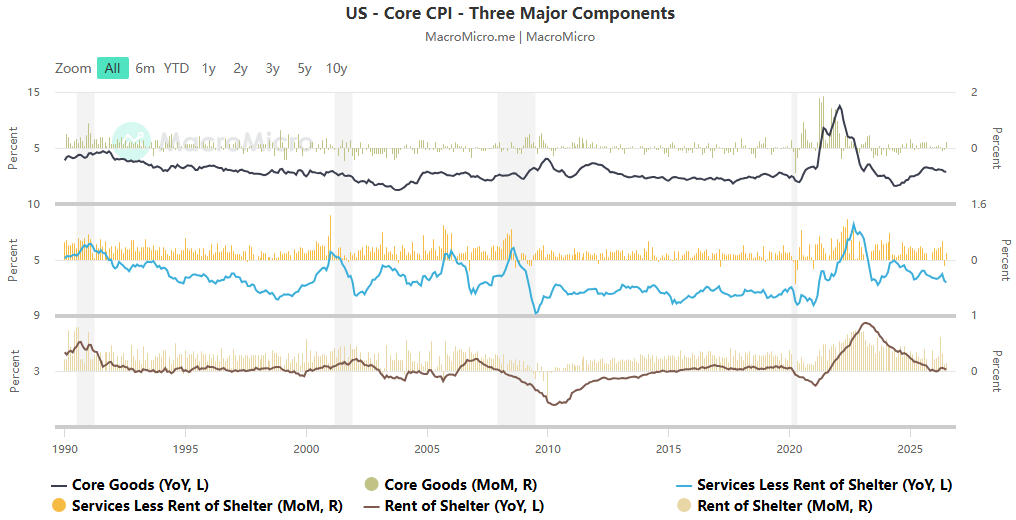
The US Consumer Price Index (CPI) fell for the second consecutive month in July, and the Producer Price Index (PPI) also slowed significantly. Coupled with the continued decline in international oil prices, market concerns about the Federal Reserve's tightening policy quickly eased. ACE Markets monitoring shows that, driven by positive inflation, yields on US Treasury bonds of all maturities generally declined, with the largest drop reaching 9 basis points. Short-term interest rate contract pricing indicates that major funds are significantly reducing their bets on further rate hikes this year. Currently, the market's pricing of a September rate hike probability has fallen to around 35%, a significant cooling from nearly 50% at the beginning of the week.
According to ACE Markets, the marginal contribution of this round of inflation decline mainly comes from the phased correction in energy prices and the continued easing of supply chain pressures. However, it is important to note that medium-term inflation drivers such as the expansion of AI infrastructure, tariff barriers, and structural labor shortages have not subsided. The "two-way countercurrent" pattern of inflation and anti-inflation forces has not fundamentally changed, and the market's one-sided trading on the "end of the interest rate hike cycle" still carries the risk of expectation gap correction.
Internal divisions within the Federal Reserve are widening, creating a window for reshaping policy communication.
Regarding the current policy path, Federal Reserve officials have recently made a series of statements, revealing a clear divergence of opinions and highlighting the complexity of current policy decisions. Former Dallas Fed President Kaplan explicitly believes that holding rates steady in July was the right choice, advocating that policy should remain open in September to avoid a predetermined path. Richmond Fed President Barkin, on the other hand, points out that current interest rate levels are already restrictive, and as external shocks gradually subside, there is a basis for inflation to ease; however, the unexpected resilience of the US economy still leaves the deep-seated risk of inflation unresolved.
In contrast to the aforementioned cautious stance, Cleveland Fed President Hamak released a strong hawkish signal. She believes that current policies are not sufficiently restrictive, that inflationary pressures are widespread, and that the Fed needs to continue raising interest rates to prevent the economy from overheating. She also warned of asset bubble risks in private lending and artificial intelligence, as well as the financial instability risks posed by leveraged funds flowing into the US Treasury market. ACE Markets believes that the divergence in officials' positions is not accidental; its essence lies in the differing perceptions within the Fed regarding the "persistence of inflation" and the "strength of economic resilience."
The market previously over-bet on hawkish rate hikes when oil prices surged, and recently, due to a rapid shift in expectations towards a dovish stance based on monthly inflation data, both extremes of pricing have resulted in discrepancies. We expect that Federal Reserve Chairman Warsh will adjust the policy communication framework at this month's Jackson Hole global central bank conference, abandoning rigid forward guidance and moving towards a more flexible, data-dependent model. This will be a key juncture for correcting market expectations and unifying policy signals. Furthermore, Kaplan's view that "fiscal deficits offset the effects of monetary tightening" aligns with ACE Markets' long-term assessment: the core contradiction in the current rise in long-term interest rates no longer lies with the Federal Reserve, but with the supply-demand imbalance caused by the continuously expanding fiscal deficit; the effects of monetary tightening are being partially offset by fiscal expansion.
Long-term US Treasury supply pressures are becoming more apparent, with fiscal imbalances pushing up long-term financing premiums.
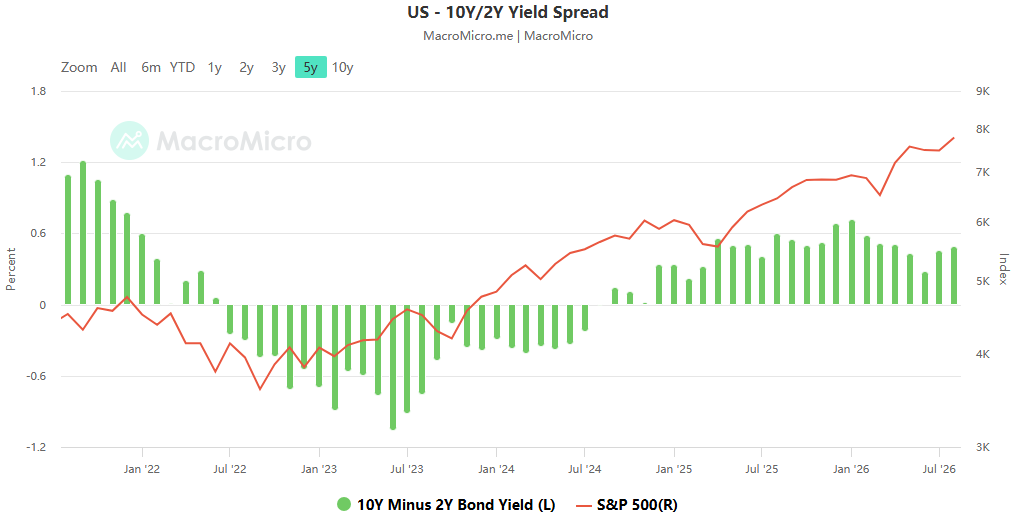
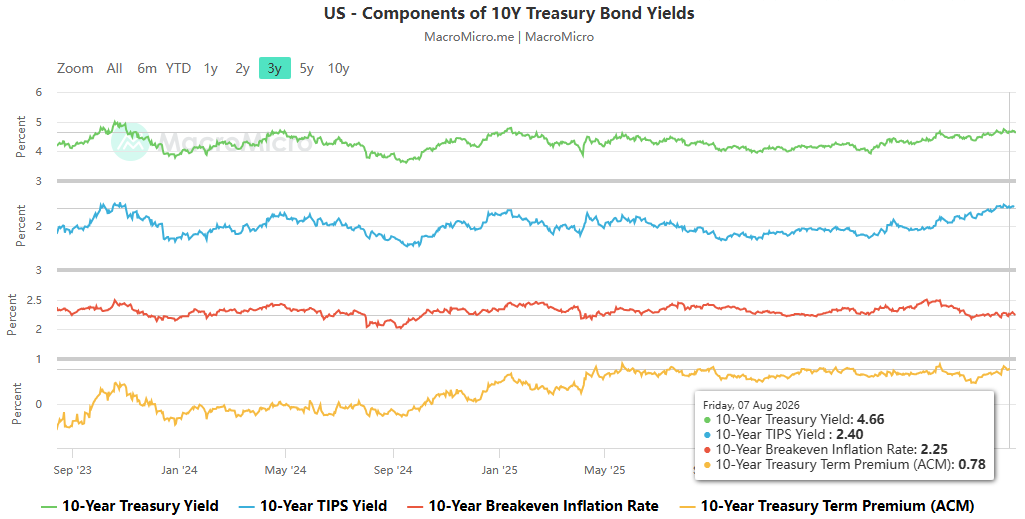
This week, the U.S. Treasury completed its issuance of 30-year Treasury bonds, with a winning bid rate of 5.216%, marking the highest issuance level for this maturity since 2001. The previous day's auction of 10-year Treasury bonds also saw a winning bid rate that hit a new high since 2007. Although the bid-to-cover ratio remained slightly higher than the historical average, indicating that overall demand had not stalled, investors' demand for risk compensation had increased significantly.
A thorough review by ACE Markets reveals that the market's widespread attribution of rising long-term yields to expectations of Federal Reserve rate hikes misses the core issue. We believe the underlying driver of this round of long-term interest rate increases has shifted to the structural expansion of fiscal supply:
The scale of outstanding debt has surged dramatically: the current outstanding amount of US Treasury bonds has reached approximately $31 trillion, more than double that of 2018, and about ten times the size of 2001. Back then, the US suspended the issuance of 30-year Treasury bonds due to insufficient debt supply; now, the expansion of supply has far exceeded the capacity of traditional demand.
Investor structure changes: As the Federal Reserve exits quantitative easing and demand from traditional official buyers contracts, the proportion of price-sensitive private investors in the market continues to increase, and a higher yield premium is needed to compensate for absorbing the same amount of supply.
The fiscal deficit continues to worsen: Fitch Ratings maintained the U.S. sovereign credit rating at "AA+" with a stable outlook this week, but warned that the fiscal deficit as a percentage of GDP will further widen by 2026. Interest payments on U.S. Treasury bonds have reached $1.17 trillion this fiscal year, a 15% year-on-year increase. The interest burden and deficit are creating a positive cycle, continuously eroding the long-term pricing basis of U.S. Treasury bonds.
Driven by high long-term financing costs, the U.S. Treasury Department has signaled a maturity structure adjustment in its quarterly borrowing statement, changing the previous wording of "increasing issuance of interest-bearing bonds" to "potential adjustment." The market generally expects future incremental issuance to lean towards mid-term bonds with maturities of 2-7 years, while continuing to rely on short-term Treasury bill financing. ACE Markets comments that this adjustment is merely a passive maturity shift, which may alleviate long-term supply pressure in the short term, but will increase the frequency of short-term refinancing and rolling risks, and is not a fundamental solution to the fiscal supply-demand imbalance. Fiscal pressure has begun to transmit to real economy financing. Currently, the average interest rate for 30-year fixed mortgages in the U.S. has risen to 6.69%, a new high since July 2025, with corporate bond issuance costs rising in tandem. The inhibitory effect of rising interest rates on the real economy is gradually becoming apparent.
Market Outlook: A short-term respite remains, but structural risks persist.
Based on the above assessment, ACE Markets offers three key perspectives on the future path of the US Treasury market and interest rates: First, a decline in short-term inflation and a cooling of interest rate hike expectations will provide a temporary respite for the interest rate market. We anticipate that the 10-year US Treasury yield will likely fluctuate between 4.25% and 4.75%, and current yield levels already offer some attractive investment opportunities. Medium-term maturities offer significantly better value than the 30-year ultra-long-term maturity. Second, the two-way risks of inflation have not been eliminated. Fluctuations in energy prices, wage stickiness, and service sector inflation may still drive fluctuating expectations. Investors should avoid unilaterally betting on a policy shift and be wary of market volatility caused by rapid shifts in expectations. Third, the structural pressures of fiscal supply are long-term variables that will not disappear with monthly data fluctuations. With the midterm elections approaching, the rigidity of fiscal expansion is difficult to reverse, and the long-term interest rate center is more likely to rise than fall, continuing to exert downward pressure on global asset pricing.