

 summary:
The Japanese yen has recently experienced a rapid recovery, coupled with rising expectatio...
summary:
The Japanese yen has recently experienced a rapid recovery, coupled with rising expectatio... 
The Japanese yen has recently experienced a rapid recovery, coupled with rising expectations of a Bank of Japan interest rate hike and hawkish comments from US Treasury Secretary Bessenter, bringing the long-dormant risk of yen carry trades back into the market spotlight. ACE Markets, through tracking cross-asset correlation signals, institutional positioning structures, and the long-short game, believes that this round of yen appreciation is not merely a simple exchange rate fluctuation, but is highly likely to trigger a cross-market chain reaction, spreading from foreign exchange to the US technology sector. The Bank of Japan's policy implementation and the speed of yen appreciation will be two core indicators determining the magnitude of the market movement.
The yen's strong rebound has reignited risk warnings for historical carry trades.
ACE Markets data shows that the yen has appreciated nearly 4% against the dollar since September, reaching a high of 152.89 intraday, its highest level since February this year, before falling sharply from the key intervention level of 160. The classic yen carry trade logic—borrowing yen at near-zero cost and investing in high-yield assets such as US stocks and bonds—has long been widely used on Wall Street due to interest rate differentials. Currently, there is still a 2.57 percentage point yield differential between the US and Japanese 1-year government bonds, meaning the underlying interest rate differential for carry trades still exists. However, the exchange rate reversal is rewriting the risk-reward ratio. If the yen appreciates rapidly and significantly, carry traders' yen liabilities will passively increase, forcing investors to sell dollar-denominated assets and buy back yen to repay loans, thus creating cross-market selling pressure.
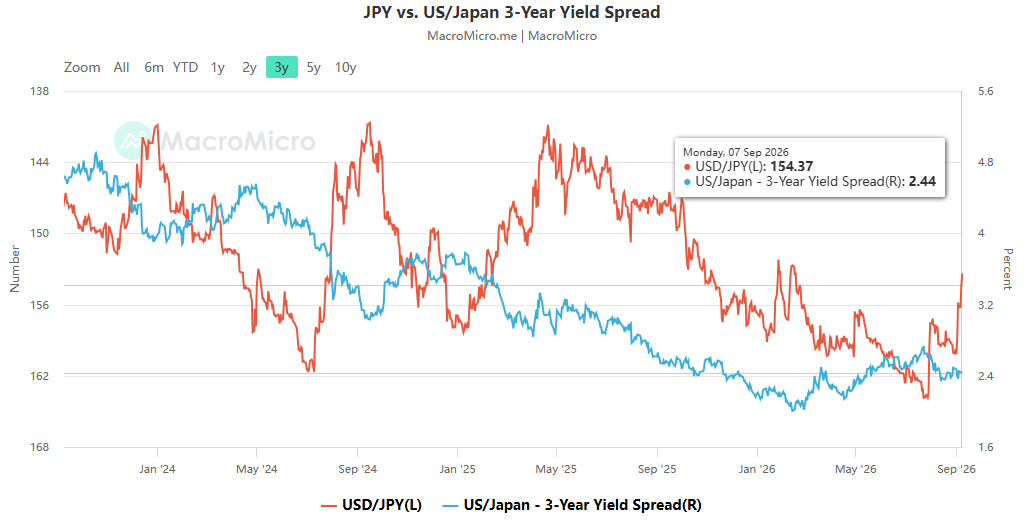
Looking back, a similar scenario played out in the summer of 2024: the yen appreciated by 13% in two months, triggering a wave of profit-taking and a sharp sell-off in the US tech sector. ACE Markets warns that the AI and tech sectors are currently overvalued and have crowded trading positions; if a rapid sell-off were to repeat itself, these sectors would face even greater downside potential. However, a repeat of the 2024 volatility is not guaranteed. Many trading institutions have already priced in the possibility of a stronger yen; only an unexpected and sudden surge in the yen would trigger a large-scale systemic sell-off, after which buying opportunities would still exist.
This change is also reflected in the performance of the US dollar index, with the ICE US dollar index also under pressure and declining. However, the cumulative appreciation of the yen in this round is still less than that in 2024. Therefore, we are not focusing on the absolute magnitude of the appreciation, but rather on the speed of the appreciation and whether it exceeds the market consensus.
Bessen's tough rhetoric has stirred market expectations, and the policy signal carries substantial weight.
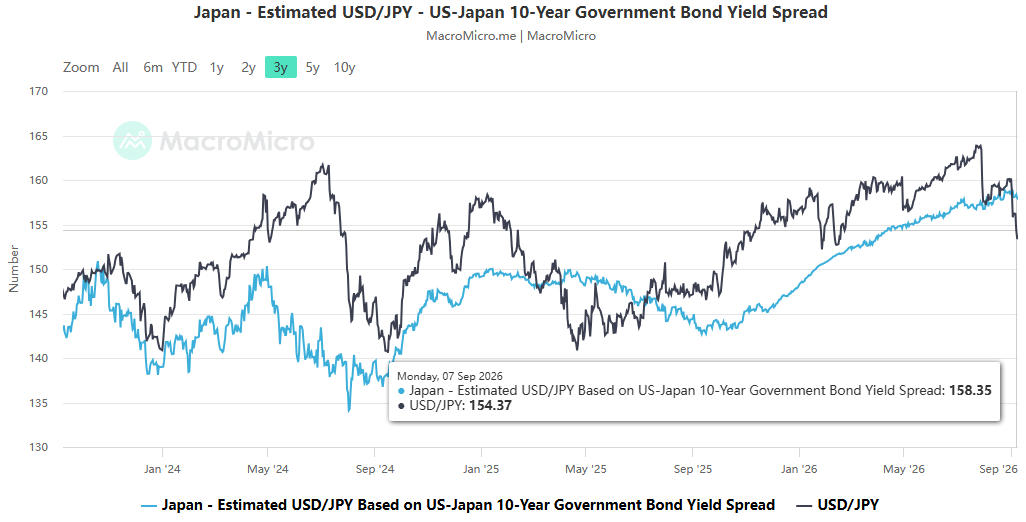
US Treasury Secretary Bessenter made a highly impactful statement, openly declaring that he possesses asymmetric information and that he is "the manipulator" on yen-related policies, directly warning yen bears. ACE Markets believes this is not merely rhetoric. Based on institutional feedback, the market generally interprets this statement as more than just empty rhetoric; it's a clear signal to the trading market that the US and Japan are coordinating their exchange rate strategy, and that short sellers betting on a continued weakening yen face extremely high policy risks. Catalyzed by these remarks, hedge funds have begun adjusting their positions, with a large number of options trades betting on the USD/JPY exchange rate falling below 150 by the end of the year, and some long-term options even targeting 140. Trading funds have begun positioning for a long yen rally.
The battle between bulls and bears intensifies: Japanese retail investors are shorting against the trend, potentially fueling the yen's rise.
The current internal game in the foreign exchange market is highly fragmented. ACE Markets' position data shows that while overseas funds are gradually unwinding their yen carry trades and hedge funds are betting on a stronger yen, Japanese retail investors are still betting against the trend and expecting the yen to weaken, resulting in a high level of net short positions in the yen.
Japanese retail investors traditionally have a contrarian trading habit: buying more dollars as the yen appreciates. However, with the USD/JPY pair breaking below the key support level of 155, retail trading behavior has become more cautious. Our analysis suggests that if the yen continues its upward trend, many retail investors' long dollar positions will trigger stop-loss orders, forcing them to sell dollars and buy yen. This contrarian short selling by retail investors could then become a passive force pushing the yen higher. The options market is also sending strong downward signals, with the trading volume of USD/JPY put options expiring at the end of the year significantly exceeding that of call options, indicating a strong consensus in the market that the USD/JPY pair will test the 150-152 range.
Market opinions are clearly divided, with the two central banks' struggle setting the ceiling for the yen's upward movement.
Despite the yen's sharp rise, Wall Street institutions are significantly divided on the sustainability of this rally. ACE Markets, summarizing the logic of various institutions, concludes that the yen's future potential essentially depends on the policy game between the two major central banks.
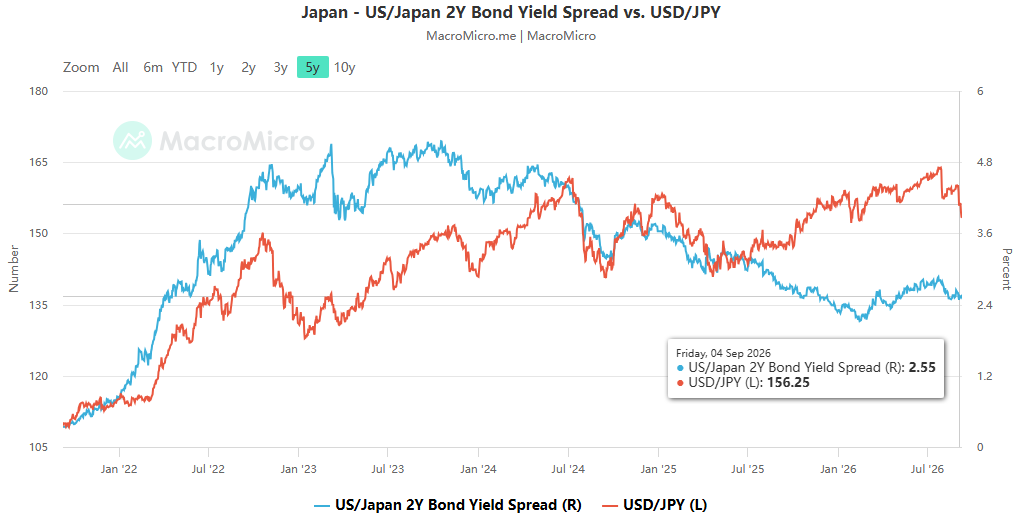
The extent to which the Bank of Japan (BOJ) implements interest rate hikes: If the BOJ's tightening pace does not exceed market expectations, the yen's further upside potential will be limited. Japanese authorities also do not want the yen to appreciate excessively; when the exchange rate approaches 150, it may face policy-level resistance. However, as long as the BOJ does not close the door on further interest rate hikes, the yen will continue to receive underlying support. The repatriation of overseas funds by Japanese export companies could also be an additional catalyst for the yen's appreciation.
The Fed's policy direction creates a check and balance: if the Fed's September meeting releases hawkish signals or even raises interest rates, the interest rate differential between the US dollar and the Japanese yen will widen again, which will limit the downside potential of the dollar against the yen.
Cross-asset implications: Exchange rate fluctuations can have cascading effects, and investors need to be wary of chain reactions.
From a macro asset perspective, ACE Markets reminds traders not to view the USD/JPY exchange rate in isolation. The risk of unwinding carry trades due to a stronger yen will propagate along the chain of foreign exchange → US Treasuries → US tech stocks. Even if systemic risk doesn't immediately erupt, the crowded AI tech sector will be more susceptible to capital outflows. Traders should not simply bet on a continued surge in the yen; they need to continuously monitor three key signals: the Bank of Japan's meeting results, the Federal Reserve's September interest rate decision, and the stop-loss status of retail positions.